Paper Airplane in Space 2026: Scientists Find The Answer
Science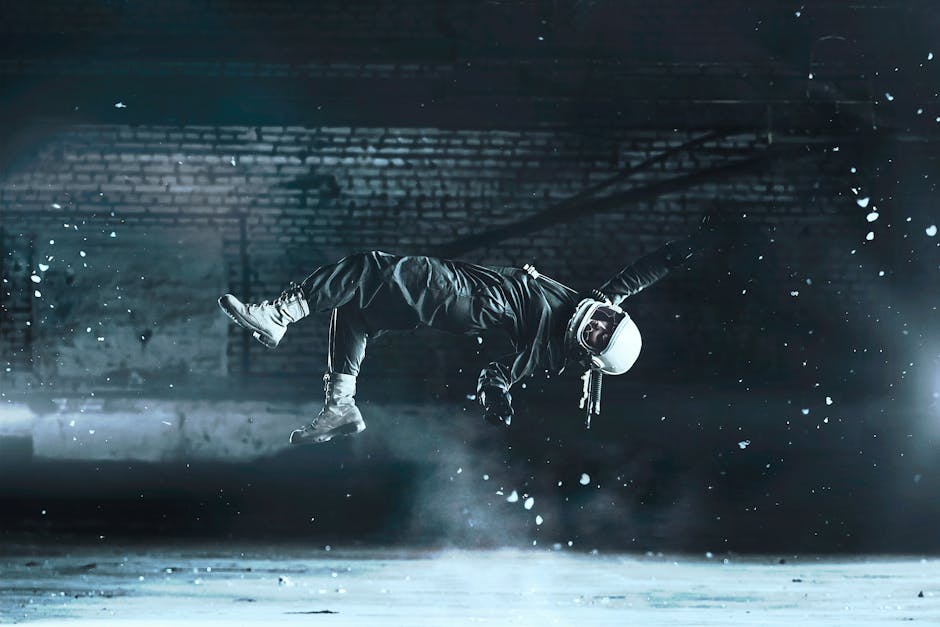
A precisely folded paper dart soars on an invisible current of air, a temporary triumph over gravity. You have seen it a thousand times. Now, imagine that same paper dart, thrown with the same hopeful flick of the wrist, but in the silent, unforgiving vacuum of deep space. It does not soar. It does not glide. It becomes, in an instant, just another piece of tumbling cosmic debris.
This isn't just a thought experiment anymore. A scientific paper published in mid-June 2026 by researchers Maximilien Berthet and Kojiro Suzuki has formally modeled the scenario, providing a definitive answer to a question that has floated in the public consciousness for decades. Their work, far from being a trivial exercise, provides deep insights into the physics of flight in non-terrestrial environments. As humanity pushes farther into the solar system, understanding these fundamentals becomes essential for everything from landing on Mars to maneuvering satellites.
The Ground Rules of Flight: Why Air Is Everything
To understand why a paper airplane fails in a vacuum, we must first revisit why it works on Earth. Flight, for any object heavier than air, is a careful balancing act between four forces: thrust, drag, lift, and weight. Your arm provides the initial **thrust**. Earth’s gravity provides the **weight**, constantly pulling the plane downward. The magic happens with the other two.
**Lift** is the upward force generated by the wings that counteracts weight. As the plane moves forward, its wings, shaped like a simple **airfoil**, split the air. The air traveling over the curved top of the wing moves faster than the air moving under the flat bottom. According to Bernoulli's principle, this speed difference creates a pressure difference: lower pressure on top, higher pressure on the bottom. This imbalance pushes the wing, and the entire plane, upward.
A paper airplane is a **glider**. It has no engine to provide continuous thrust. Instead, it brilliantly converts the potential energy from its initial height and the kinetic energy from your throw into a long, graceful forward glide. **Drag**, the resistance of air pushing back on the plane, is the enemy of speed but also a vital stabilizing force. It prevents the plane from tumbling wildly, allowing the tail and wings to act like rudders, ensuring a stable path.
In the vacuum of space, this entire elegant system collapses. There is no air. Without a medium to flow over and under the wings, there can be no pressure difference. Without a pressure difference, there is no lift. The core mechanism of flight is absent. It is like expecting a sailboat to move forward without wind or water; the vessel is there, but the medium it needs to interact with is gone.
The Berthet-Suzuki Experiment: A Digital Deep Dive
The **paper airplane space experiment results 2026** did not come from an astronaut tossing a paper dart out of an airlock. Such an experiment would be impractical and the result difficult to track. Instead, Berthet and Suzuki employed a far more powerful and precise tool: **Computational Fluid Dynamics (CFD)**. CFD is a branch of physics involving complex computer simulations to predict fluid flow, heat transfer, and related phenomena.
Engineers at companies like Boeing and SpaceX use CFD to model the airflow around a jet wing or the fiery plume from a rocket engine before ever building a physical prototype. Berthet and Suzuki applied this same rigorous methodology to a standard “Nakamura Lock” paper airplane design. They created a highly detailed digital model of the plane and placed it within a simulated environment devoid of any atmosphere—a perfect vacuum.
They then gave this digital airplane an initial velocity and a slight rotational spin, mimicking a realistic throw. The simulation calculated the forces acting on the plane at millions of points across its surface. Since the primary force in a fluid—air pressure—was set to zero, the simulation focused exclusively on the plane’s own inertia and momentum. The objective was clear: to map out exactly what happens when aerodynamics are removed from the equation.
Paper Airplane in Space What Happens 2026: The Verdict
The results of the simulation were unequivocal and perfectly aligned with the predictions of classical mechanics. When you throw a paper airplane in the vacuum of space, it does not fly. It does not glide. It does not soar. It simply continues along the path it was thrown on, a perfect illustration of Newton's First Law of Motion.
The plane follows a **ballistic trajectory**. Imagine throwing a small rock in space. It will travel in a straight line at a constant speed forever, unless it is pulled by the gravity of a nearby planet or star. The paper airplane does exactly the same thing. Its wing shape, so critical on Earth, is completely irrelevant in the absence of air. It is no different from a crumpled ball of paper or an astronaut’s lost wrench.
> \"On Earth, air is both the engine and the rudder for a paper airplane. In space, you have neither.\"
The most interesting finding from the simulation relates to its stability. On Earth, a well-made plane corrects its own orientation. In space, any tiny, imperfect spin you impart during the throw is preserved indefinitely. With no air resistance to dampen the motion, the paper airplane will tumble end over end, or spin along its axis, forever. The simulation showed this chaotic-looking tumble is actually predictable, governed entirely by the object's initial angular momentum.
The ISS Exception: A Pocket of Earth in Orbit
This brings us to a common point of confusion when people ask, **can you fly a paper airplane in space?** The answer depends on where in space you mean. While the vacuum outside is hostile to flight, the environment *inside* the International Space Station (ISS) is a different story entirely. The ISS is a pressurized module filled with breathable air at roughly the same pressure and composition as we experience on Earth at sea level.
In this environment, a paper airplane flies. In fact, it flies spectacularly well. All the necessary ingredients are present: air, an airfoil, and an initial thrust. The key difference is the absence of strong gravitational pull. On Earth, a thrown plane follows a gentle arc toward the ground as gravity wins its battle against lift and momentum. Inside the ISS, which is in a constant state of freefall around the Earth, objects experience **microgravity**.
A paper airplane thrown inside the station does not arc toward the "floor." It sails in an almost perfectly straight line, maintaining its altitude until it gently bumps into a wall or the subtle effects of air resistance finally slow it to a complete stop. At that point, it doesn't fall; it just floats motionlessly. Astronaut Don Pettit famously demonstrated this during his expedition on the ISS, creating videos that show paper planes and other objects sailing for long distances down the station's corridors, a beautiful demonstration of physics in a unique environment.
The Other Side: Simulation vs. Reality
As with any scientific inquiry based on modeling, we must acknowledge the limitations. The Berthet-Suzuki paper is based on a simulation, not a direct physical experiment in the vacuum of space. Computer models, no matter how sophisticated, are built on a set of assumptions. The digital paper airplane might not capture the subtle flexing of real paper, nor does it account for minuscule forces like solar radiation pressure or the outgassing of molecules from the paper itself, which could impart an infinitesimal thrust over millions of years.
Some might also argue that dedicating significant computational resources to a question with a fairly predictable answer represents a questionable use of scientific time and funding. In a world with pressing challenges, a deep dive into cosmic paper darts can seem frivolous. This critique touches on a larger debate about the value of curiosity-driven research versus mission-oriented science. Both have their place, but priorities are always a subject of debate within the scientific community.
These points are valid. A simulation is not reality. Yet, the fundamental physics governing this particular problem are so well-established that the core conclusion is beyond any serious doubt. The value of the simulation is not in discovering an unknown outcome but in precisely quantifying it and visualizing it in a way that is both scientifically rigorous and publicly accessible.
Expert Perspective: From Paper Darts to Martian Drones
As a journalist covering technology and science for nearly two decades, I see the Berthet-Suzuki paper not as an endpoint, but as a brilliant educational tool and a "null hypothesis" for aerodynamics. It defines the absolute zero of flight, providing a baseline from which we can explore flight in all its other forms. The true significance of this **science paper airplane space prediction** is what it teaches us about flight in thin atmospheres, the next frontier for aeronautical engineering.
The most compelling application is on Mars. The Martian atmosphere is incredibly tenuous, with a surface pressure less than 1% of Earth's. NASA's Ingenuity helicopter proved powered flight was possible there, but it required rotor blades that were exceptionally large and spun at an astonishing 2,400 revolutions per minute to bite into the thin air. So, **will paper airplanes work in space**, specifically on a world like Mars? Yes, but just barely.
A paper airplane thrown on Mars would generate a tiny amount of lift. Instead of tumbling like a rock in a vacuum, it would exhibit a slight, almost sorrowful, gliding behavior as it dropped quickly to the rusty surface. The Berthet-Suzuki model, by defining the vacuum condition, gives engineers a critical data point. It helps them calibrate their CFD simulations for low-density environments, improving designs for future Martian gliders, high-altitude surveillance drones on Earth, or even the controlled de-orbiting of defunct satellites using atmospheric drag braking.
What This Means For You
This seemingly abstract finding has practical implications for how you understand the world. First, it sharpens your physical intuition. On Earth, we tend to bundle the concepts of aerodynamics and gravity. This experiment forces you to decouple them. A paper airplane in a vacuum acts just like a thrown ball of paper, reinforcing the core principle that an object's shape only matters when it has a medium to interact with.
Second, it provides a new lens for interpreting news about space exploration. When you read about a probe like the Mars Reconnaissance Orbiter using "aerobraking" to lower its orbit, you can now visualize the process. The spacecraft is strategically dipping into the very top of the Martian atmosphere, using the faint drag—the same force that stabilizes a paper airplane on Earth—to shed speed without burning precious fuel. It's a high-stakes version of the same physics.
Finally, the study offers a moment of appreciation for our own planet. The simple, fleeting joy of watching a paper airplane soar is a direct result of our dense, nitrogen-and-oxygen-rich atmosphere. That blanket of air is not empty space; it is a tangible fluid, a vibrant medium that enables weather, life, and the graceful flight of a child's folded creation.
Frequently Asked Questions
**Can you fly a paper airplane in space?**
No, not in the vacuum outside a spacecraft, because there is no air to provide the necessary lift for its wings. It would instead tumble and travel in a straight line. You can, however, fly one inside the pressurized, air-filled cabin of the International Space Station.
**What happens if you throw a paper airplane in zero gravity?**
In an environment with both zero gravity and air (like inside the ISS), a paper airplane flies exceptionally well. Since gravity isn't pulling it down, it will maintain its altitude and glide in a long, straight line until air resistance slows it to a stop or it hits a surface.
**Will paper airplanes work on Mars?**
Technically, yes, but they would perform very poorly. The Martian atmosphere is extremely thin, less than 1% the density of Earth's. A thrown paper airplane would generate a minimal amount of lift, resulting in a very short, steep glide before landing.
Closing Thought
The question of **what happens if you throw a paper airplane in space** has now been formally answered for 2026 and beyond. This exploration, born from simple curiosity, reinforces a profound lesson for the spacefaring age: our instincts are terrestrial. To truly understand and navigate the cosmos, we must be willing to question our most basic assumptions, even those as simple as the flight of a paper toy, and see where the science leads us.