Artemis II Earth Photos 2026: NASA's Stunning First Images
Science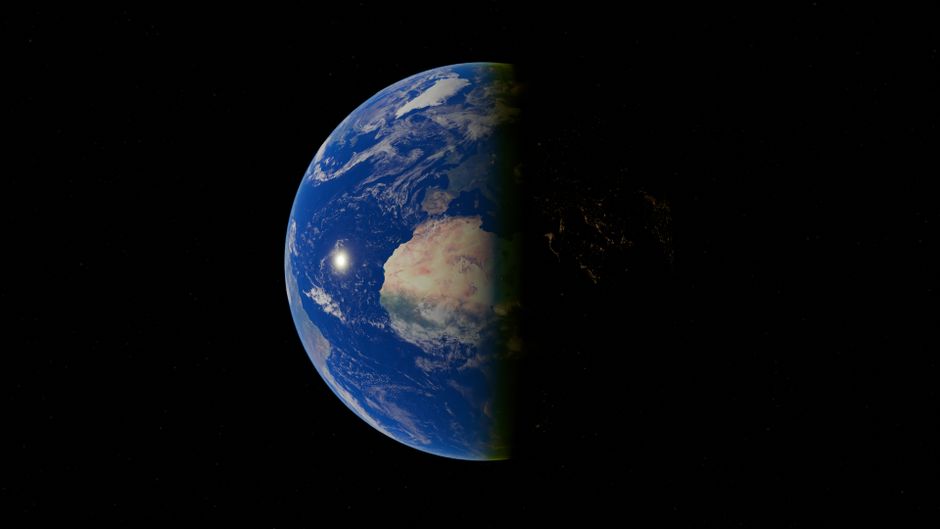
Artemis II Earth Photos 2026: NASA's Stunning First Images from Deep Space
**At a Glance:**
* **Historic Release:** NASA has published the first photos of Earth taken by the Artemis II crew from approximately 100,000 miles (160,000 km) away.
* **Critical Milestone:** The images were captured as the Orion spacecraft was "quickly closing in on the moon," marking a pivotal moment in the first crewed lunar mission in over 50 years.
* **Fresh Perspective:** Released on Sunday, April 5, 2026, these photos provide a new, profound look at our planet from a vantage point last seen during the Apollo era.
* **Global Signal:** The initial report came from Al Jazeera English, highlighting the worldwide interest in this return to lunar exploration.
In a moment that bridges half a century of spaceflight ambition, NASA has just given humanity a fresh set of eyes on its home. On Sunday, April 5, 2026, the space agency released the first stunning photographs of Earth taken by the crew of the Artemis II mission, a sight unseen by human eyes since 1972. The **Artemis II Earth photos 2026** show our planet as a brilliant, fragile marble suspended in the black velvet of deep space, captured from a distance of about 100,000 miles—a point where the crew was, as reported, "quickly closing in on the moon." This isn't just a photographic achievement; it's a visceral, symbolic kickoff for a new chapter in human space exploration, one that aims to be permanent. The release, first highlighted by Al Jazeera English, instantly captivated a global audience, reminding us of both our technological prowess and our shared planetary identity.
Context: Why This Moment Matters in 2026
To understand the gravity of these images, you must rewind the clock. The last time astronauts ventured to the moon was during Apollo 17 in December 1972. The iconic "Blue Marble" photo from that mission became one of the most reproduced images in history, fueling the environmental movement and reshaping human consciousness. For decades, that view remained a relic of a bygone era of ambition.
The Artemis program, named after Apollo's twin sister, represents America's—and a growing international consortium's—commitment to not just revisit the moon, but to stay. Artemis I, an uncrewed test flight, successfully orbited the moon and returned in late 2022, proving the foundational hardware. **Artemis II**, the subject of today's breaking news, is the crucial follow-up: the first crewed mission. It won't land but will instead perform a lunar flyby, testing life support systems and operations with astronauts aboard the Orion capsule.
The release of these first **NASA Artemis II first images Earth** this week is therefore loaded with meaning. It signals that the mission is proceeding nominally on its complex trajectory. It provides the first human-recorded perspective from a lunar-bound spacecraft in the 21st century. And it arrives at a time when global attention is divided between terrestrial crises and cosmic aspiration, serving as a potent reminder of the latter. The fact that these images broke via a global news outlet like Al Jazeera underscores that this mission, while led by NASA, carries significance for all of humanity.
A Deep Dive: The Photos and the Mission Behind Them
According to the initial reports, the **stunning Earth photos from moon mission 2026** were taken as the Orion spacecraft was approximately 100,000 miles from Earth. This is a profound point in the journey. It's far beyond the orbit of satellites and the International Space Station (roughly 250 miles up), yet not quite at the distance where the Earth would shrink to a mere dot. At this range, continents are clearly visible, but the entire planet fits within a single frame—a perspective that elicits a powerful emotional and intellectual response known as the "Overview Effect," often described by astronauts as a transformative sense of connection and responsibility.
**The Technical and Human Journey:**
- **The Trajectory:** Artemis II launched on a multi-day journey to the moon. The 100,000-mile point is part of a complex orbit known as a "hybrid free return trajectory." The crew was likely in the process of checking systems, adapting to the deep-space environment, and preparing for the critical engine burn that would insert them into a lunar orbit.
- **The Camera:** While specific details of the camera equipment used will be clarified by NASA, the Orion spacecraft is equipped with both internal and external high-resolution cameras. These are used for engineering diagnostics, public outreach, and, as we see now, creating historic documentation. The quality of the images released suggests the use of modern digital sensors far superior to the film cameras of the Apollo era.
- **The Crew's Role:** The four astronauts—commander, pilot, and two mission specialists—are not just passengers. Capturing these images is part of their role as explorers and communicators. The act of framing and taking the photo is a human moment in a highly automated mission, a deliberate act of sharing the experience with those of us on the ground.
The images themselves, though we await the full high-resolution suite from NASA, are described as "stunning." We can expect them to show:
- A sunlit crescent Earth against the absolute darkness of space.
- The deep blue of the oceans and the swirling white of cloud patterns.
- A lack of visible human borders—a unified sphere.
This visual report is the first major public milestone of the crewed phase of the mission, a tangible product that says, "We are here, we are on our way, and this is what it looks like."
Analysis: More Than Just a Pretty Picture
The immediate reaction to the **Artemis II mission photos Al Jazeera** highlighted will be awe, and rightfully so. But the analytical lens reveals deeper layers of significance.
**1. A Psychological and Cultural Reset:** The original Apollo images fundamentally changed how we see ourselves. In an age of climate change, geopolitical fracture, and digital fragmentation, these new images serve as a 21st-century reset button. They re-inject the Overview Effect into the global psyche, offering a unifying perspective at a time when it is desperately needed. They are a tool for inspiration, reminding students, policymakers, and the public of what we can achieve cooperatively.
**2. A Technical Confidence Booster:** For NASA and its partners (including the Canadian Space Agency providing the robotic arm and the European Service Module), the successful transmission of high-quality imagery from deep space is a technical validation. It demonstrates the robustness of the communication links through the Deep Space Network and the functionality of onboard systems in the radiation-heavy environment of cis-lunar space. Simply put: if they can send breathtaking photos, the vital telemetry data on crew health and spacecraft integrity is also flowing reliably.
**3. The Dawn of the "Cislunar Economy":** These photos are the first tourist snapshots from the nascent zone of space where future economic activity is projected to flourish—the region between Earth and the moon. This mission is proving the transportation pathway. The imagery makes the abstract concept of a "cislunar economy" concrete, showing the roadway that future commercial stations, fuel depots, and mining survey craft will travel.
**4. A Strategic Communications Tool:** Releasing these images is a masterstroke in public engagement. It maintains momentum and public support for the expensive, long-term Artemis program. It visually justifies the investment and builds excitement for the next steps: Artemis III's landing, the Lunar Gateway station, and eventually Mars. In a landscape where space agencies compete for talent and funding, this is powerful marketing.
Industry Impact: Ripples Across the Space and Science Landscape
The release of the **NASA moon mission Earth images 2026** sends immediate ripples far beyond NASA's walls.
- **Commercial Space Partners:** For companies like SpaceX (developing the Starship HLS lunar lander), Blue Origin, and others building hardware for later Artemis missions, this success de-risks the overall program. It validates the launch and initial trajectory, making their upcoming roles more real. Investors in space infrastructure see a major milestone achieved.
- **Earth Science:** While artistic, these images are also data. Comparing high-resolution views of Earth's atmosphere, cloud cover, and albedo (reflectivity) from this unique angle can provide calibration points and new perspectives for climate models and weather satellites. It's a remote-sensing platform with a very, very long lens.
- **Global Space Agencies:** The success of Artemis II strengthens NASA's position as a leader in international collaboration. It likely accelerates formal commitments from other nations to participate in the Lunar Gateway or surface missions. Conversely, it may also intensify the pace of competing lunar programs from other nations, creating a dynamic, multi-player return to the moon.
- **Media and Education:** For outlets like Al Jazeera, which broke the news, and the wider media ecosystem, this event is a major draw. It fuels documentaries, news segments, and educational content for years. Planetariums and science museums now have fresh, breathtaking visuals for their exhibits.
- **The "New Space" Ethos:** This mission embodies the blend of traditional government-led exploration (NASA's SLS rocket and Orion) with new commercial partnerships (landing systems, future logistics). Its success validates this hybrid model for tackling grand challenges in space.
What This Means Going Forward: The Road Ahead After April 5, 2026
The publication of these photos on Sunday, April 5, is not an endpoint; it's a starting gun. Here’s what the world should watch for next:
**Immediate Timeline (Next Days/Weeks):**
- **More Imagery:** NASA will likely release a flood of additional photos and video—views of the moon's far side during close approach, shots of the crew inside the capsule, and perhaps a stunning "Earthrise" over the lunar horizon.
- **Crew Updates:** We will hear directly from the astronauts via live video feeds about their experience seeing Earth recede and the moon approach, providing firsthand accounts of the journey.
- **Mission Milestones:** All attention turns to the lunar flyby, the successful completion of system tests, and the critical engine burn to set Orion on its return path to Earth.
**Medium-Term (The Rest of 2026 and 2027):**
- **Artemis II Splashdown and Analysis:** The successful recovery of the crew and capsule will be the next huge milestone. The post-mission data review will inform and finalize plans for Artemis III.
- **Artemis III Hardware Readiness:** Focus will intensify on the development and testing of the lunar lander (Starship HLS), next-generation spacesuits, and the Gateway's first modules. Any delays or issues will come under greater scrutiny.
- **International Agreements:** Expect formalization of roles for international partners on later missions, solidifying the Artemis Accords framework.
**Long-Term Vision (2028 and Beyond):**
- **Artemis III Landing:** The program's flagship goal—returning humans to the lunar surface, targeting the South Pole. The images released today are the first step on that literal and figurative journey.
- **Sustainable Presence:** The establishment of a base camp, regular crew rotations, and the beginning of in-situ resource utilization (e.g., mining water ice for air and rocket fuel).
- **Mars as the Horizon:** Every success in the Artemis program builds the confidence and technology needed for the first human mission to Mars, currently envisioned for the 2030s or 2040s.
The photos from April 5, 2026, will be seen as the moment the moon became a tangible destination for a new generation. They are the opening scene of a story that will dominate the rest of the decade in space exploration.
FAQ: Your Quick Questions Answered
**Q: Why are these Artemis II photos such a big deal?**
A: They are the first photos of Earth taken by astronauts on a lunar mission since the Apollo program ended in 1972. They mark the successful crewed return to deep space and offer a powerful, unifying view of our planet from a rare vantage point.
**Q: How far away was the spacecraft when these photos were taken?**
A: The crew and the Orion capsule were approximately 100,000 miles (160,000 kilometers) from Earth. For context, the International Space Station orbits at about 250 miles up. The moon is about 240,000 miles away.
**Q: What happens next in the Artemis II mission?**
A: After this point of capturing the Earth images, the spacecraft will complete a lunar flyby, using the moon's gravity to slingshot into a wide orbit before firing its engines to return to Earth for a splashdown in the Pacific Ocean. The entire mission lasts about 10 days.
Key Terms Explained
- **Artemis Program:** NASA's ongoing program to return humans to the moon and establish a sustainable presence there, with the goal of preparing for future missions to Mars.
- **Artemis II:** The first crewed mission of the Artemis program. It will carry four astronauts on a lunar flyby test flight, without landing, to validate all systems for deep-space travel.
- **Orion Spacecraft:** The crew capsule built by NASA (with a European Service Module) that will carry astronauts to lunar orbit and back.
- **Cis-lunar Space:** The region of space between Earth and the moon, and around the moon. It is the new frontier for planned economic and exploration activity.
- **Overview Effect:** A cognitive shift in awareness reported by astronauts when viewing Earth from space, characterized by a profound sense of interconnection and the fragility of our planet.
Practical Takeaways for the General Reader
1. **You Are Witnessing History:** This is the 21st-century equivalent of the Apollo 8 "Earthrise" moment. Pay attention to the mission updates—you are watching the foundational steps of humanity's return to deep space.
2. **This Is a Global Endeavor:** While led by NASA, the Artemis program involves international partners (Europe, Canada, Japan, etc.) and commercial companies. It's a model for how large-scale exploration might work in the future.
3. **The Technology is Real and Working:** The stunning photos are proof that the complex, years-in-the-making spacecraft and rockets are performing as intended, building confidence for more ambitious missions ahead.
4. **Inspiration is a Tangible Output:** Beyond science, one of the core products of this mission is inspiration for STEM fields. Use these images to spark conversations with young people about science, engineering, and our place in the universe.
5. **The Moon is Becoming a Destination:** This isn't a one-off trip. The goal is to build a lasting human presence on the moon. The success of Artemis II directly paves the way for astronauts to live and work on the lunar surface later this decade.
The release of the first **Artemis II Earth photos 2026** is more than a news bulletin. It is a statement of capability, a gift of perspective, and a promise of a future that extends beyond our atmosphere. As the crew of Artemis II continues its journey, they carry with them not just the hopes of a nation, but the renewed gaze of a planet, looking back at itself from the depths of space, and forward to its next frontier.