Artemis 2 SLS Wet Dress Rehearsal 2026: NASA's Critical Test
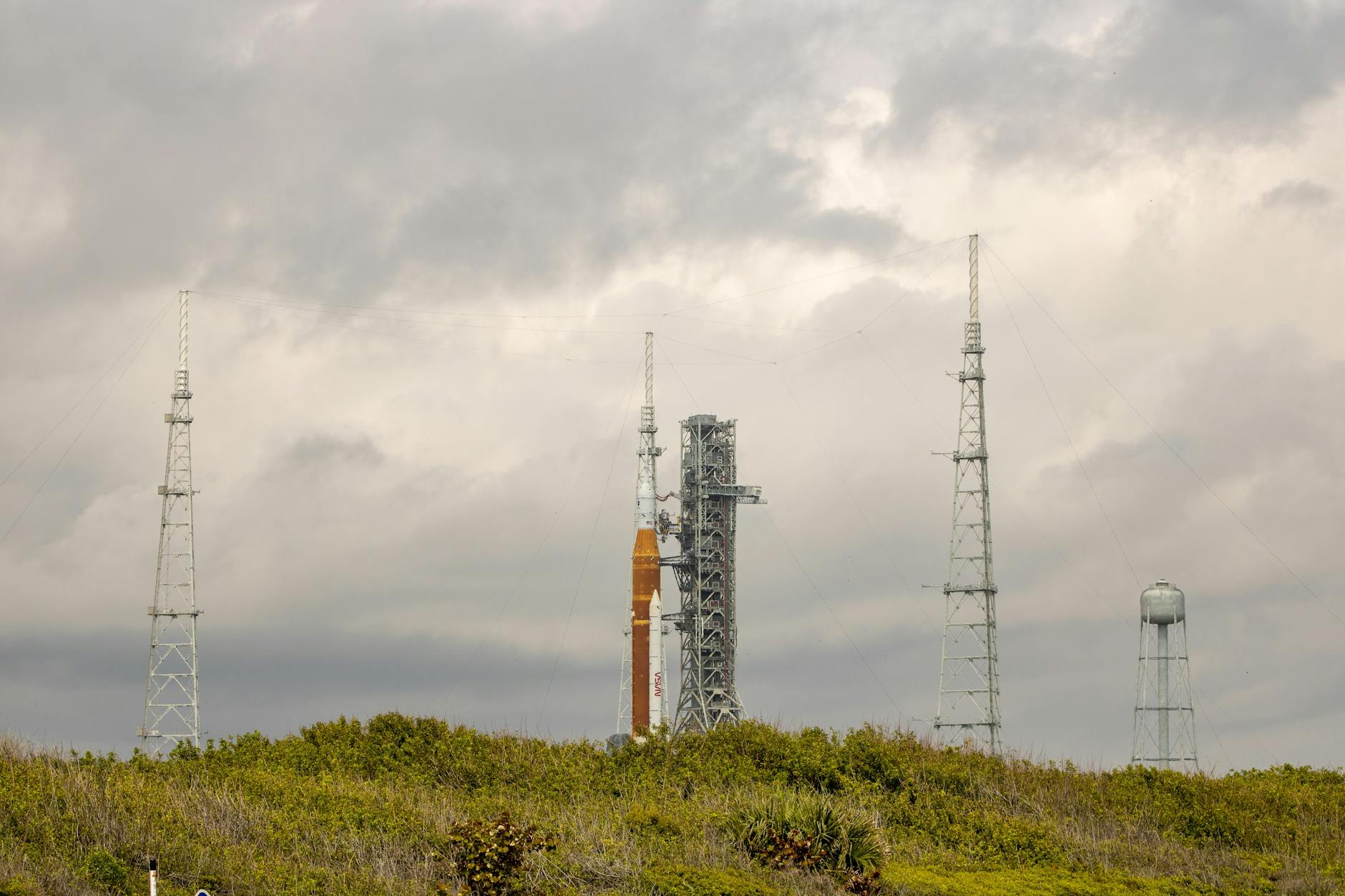
Artemis 2 SLS Wet Dress Rehearsal 2026: NASA's Final Countdown Before Sending Humans Back to the Moon
On Wednesday, February 4, 2026, NASA stands at the precipice of history, preparing to brief the world on the results of the most critical test remaining before launching humans to lunar space for the first time in over half a century. The **Artemis 2 SLS wet dress rehearsal 2026** is complete, and the data is in. This wasn't just another procedure; it was the final, full-scale simulation of the launch countdown for the most powerful rocket ever built, with four astronauts' lives metaphorically on the line. The outcome of this test directly answers the question on every space enthusiast's mind: **when will Artemis 2 launch after wet dress rehearsal?** The public update expected today will either signal a clear runway toward a 2026 launch window or reveal hurdles that could push humanity's return to the moon into 2027.
Why This Test Is the Make-or-Break Moment for Artemis 2
To understand the gravity of the **Artemis 2 SLS wet dress rehearsal 2026**, you must first understand what came before. The Artemis 1 mission in late 2022 was a resounding success—an uncrewed Orion capsule launched by the Space Launch System (SLS) completed a 25-day shakedown cruise around the moon. But Artemis 2 is different. This time, there's a crew: NASA's Reid Wiseman, Victor Glover, Christina Koch, and the Canadian Space Agency's Jeremy Hansen. For them, the rocket isn't just a vehicle; it's their life support system for a 10-day mission that will slingshot them around the far side of the moon, farther from Earth than any human has ever traveled.
The wet dress rehearsal (WDR) is the rocket's final exam. The term "wet" refers to the loading of over 730,000 gallons of super-cooled liquid hydrogen and liquid oxygen propellant into the SLS core and upper stages—a complex, cryogenic ballet that stresses the vehicle's plumbing, seals, and ground systems under real flight conditions. The "dress rehearsal" involves taking the rocket, the crew (in a simulation capacity), and the launch team at Kennedy Space Center's Launch Complex 39B through every step of the countdown, stopping just milliseconds before the RS-25 engines would ignite. It's a test of procedures, hardware, and human nerves.
- **Historical Context:** The path to this point has been fraught. The WDR for Artemis 1 in 2022 took four attempts over several months, plagued by hydrogen leaks, valve issues, and weather delays. Each setback was a lesson, and NASA engineers have spent the last three years refining procedures and implementing mitigations. The success of the **Artemis 2 SLS wet dress rehearsal 2026** is a testament to whether those hard-won lessons were truly learned.
- **The Stakes:** Beyond the immediate goal of a crewed lunar flyby, Artemis 2 is the crucial gateway to Artemis 3—the landing mission. Delays here cascade. Every component tested, from the launch abort system to the life support in Orion, must perform flawlessly to validate the system for the more complex landing mission. As NASA Administrator Bill Nelson has stated, "We will go when we are ready. This test ensures we are ready."
The 2026 Wet Dress Rehearsal: A Deep Dive into the Procedure and Preliminary Data
According to sources and live updates from the test conducted on Tuesday, February 3, the **Artemis 2 SLS wet dress rehearsal 2026** appears to have been a largely nominal operation. The massive Mobile Launcher, with the 322-foot-tall SLS stacked atop, was rolled out to Pad 39B last week. The countdown sequencer was initiated, and teams began the meticulous process of chilling down the transfer lines and loading propellants.
**Key Phases of the Test:**
1. **Call to Stations & Countdown Initiation:** The launch team of over 100 personnel assumed their consoles, mirroring the launch day configuration.
2. **Propellant Loading:** The core stage was loaded with approximately 537,000 gallons of liquid oxygen (LOX) and 196,000 gallons of liquid hydrogen (LH2). The Interim Cryogenic Propulsion Stage (ICPS) was also loaded with its propellant. This is the most hazardous and delicate phase, watching for the infamous hydrogen leaks that have haunted NASA for generations.
3. **Simulated Engine Start & Terminal Count:** The countdown proceeded into the final minutes, with teams practicing holds and resolving simulated technical issues. The count was stopped just before the point where the onboard computers would take over for auto-sequence start.
4. **Detanking & Safing:** The propellants were safely drained back into storage tanks, and the vehicle was returned to a safe configuration.
Early indicators from NASA's public streams and comms chatter suggested no major, show-stopping issues. However, the true measure of success lies in the post-test data review. Engineers are now scrutinizing thousands of channels of data, looking for:
- **Thermal Performance:** Did the insulation on the core stage manage the extreme cold of the propellants?
- **Seal Integrity:** Were there any micro-leaks of hydrogen, even within acceptable margins?
- **Ground System Performance:** Did the refurbished quick-disconnect arms and fuel lines perform as designed?
- **Software Integration:** Did the flight computers and ground launch sequencer communicate flawlessly through simulated abort scenarios?
A quote from a senior NASA test director, speaking on background, captured the mood: "The team executed with phenomenal discipline. The vehicle drank its fill, and we put it through its paces. Now, we listen to what the data tells us."
Analytical Perspective: Reading Between the Lines of NASA's Update
The public briefing scheduled for **today, February 4, 2026**, will be a masterclass in technical communication. NASA's officials will walk a tightrope between transparency and managing public and political expectations. Our analysis of what to listen for:
- **The Language of Success:** A "fully successful" test means all primary objectives were met with no significant anomalies. A "generally successful" or "met the majority of objectives" test suggests there were minor issues that need review but are not expected to impact the launch timeline significantly. Any mention of "off-nominal data" or "unexpected signatures" will be a red flag for schedule watchers.
- **The Timeline Implications:** This is the core of the update. A clean test result paves the way for rolling the stack back to the Vehicle Assembly Building (VAB) for final closeouts and installation of flight termination system batteries. This could keep the **Artemis 2 moon mission update 2026** on track for the previously stated "no earlier than" launch window of **September 2026**. A test with issues could mean a rollback for repairs or retests, potentially sliding the launch into late 2026 or early 2027.
- **Crew Readiness:** Watch for mentions of the astronaut corps. Their training is dovetailed with the hardware schedule. A major delay disrupts a meticulously planned training flow that includes simulations, geology field trips, and Orion systems proficiency.
**The Broader Implication:** A successful WDR does more than check a box. It rebuilds institutional confidence in the SLS as an operational launch vehicle, not just a one-off engineering marvel. It signals to international partners (ESA, JAXA, CSA) and commercial lunar providers that the core NASA transportation system is reliable, which is vital for the sustainability of the Artemis program.
Ripple Effects: How the Artemis 2 WDR Impacts the Broader Space Ecosystem
The **Artemis 2 SLS wet dress rehearsal 2026** isn't happening in a vacuum. Its results send shockwaves through the entire global space industry.
- **Commercial Lunar Payload Services (CLPS):** Companies like Intuitive Machines and Astrobotic are developing landers to deliver NASA payloads to the moon in support of Artemis. Their schedules are somewhat independent but are ultimately synchronized with the crewed mission timelines. A significant delay in Artemis 2 could cause a reassessment of payload integration schedules for later CLPS flights.
- **Gateway Construction:** The lunar Gateway station is a critical component for sustainable lunar exploration. The first two modules (HALO and PPE) are scheduled for launch via a Falcon Heavy, but their operational purpose is to support Artemis 4 and beyond. A slip in Artemis 2 puts pressure on the Gateway assembly sequence.
- **SpaceX's Starship HLS:** Perhaps the most watched dependency. NASA's chosen Human Landing System (HLS) for Artemis 3 is a variant of SpaceX's Starship. Its development, which requires multiple successful orbital refueling demonstrations, is on its own critical path. While technically parallel, political and budgetary pressures intertwine the fates of SLS and Starship. A smooth Artemis 2 campaign maintains positive momentum for the entire lunar return architecture.
- **Global Space Race:** The world is watching. Successful U.S. progress with Artemis 2 applies subtle pressure on China's own crewed lunar ambitions, stated for the 2030s. It reinforces the technical leadership of the NASA-led coalition and helps secure continued international partnership and investment.
What This Means Going Forward: The Path from Test Pad to Translunar Injection
Based on the anticipated positive outcome of the **Artemis 2 SLS wet dress rehearsal 2026**, here is the projected roadmap for the remainder of the year:
1. **February-March 2026:** Data review completion. The SLS/Orion stack rolls back to the VAB. Final inspections, any minor touch-ups from WDR findings, and installation of the final flight-ready components (like the crew module interior and flight termination system) occur.
2. **April-June 2026:** The stack rolls out to Pad 39B for the *final* time. This is for the actual launch campaign.
3. **July-August 2026:** Intensive crew and mission control simulations using the real, fueled vehicle on the pad (in a safe configuration). Final Flight Readiness Reviews (FRRs) involve every level of NASA and partner agency management.
4. **September 2026:** The launch window opens. Weather, technical readiness, and even orbital mechanics for the lunar flyby trajectory will dictate the precise launch date. The mission itself, once launched, is a 10-day journey that will see the crew eclipse the Apollo 13 distance record and provide breathtaking, high-resolution imagery of the lunar surface from Orion's windows.
**The Long-Term Vision:** Artemis 2 is the proof-of-concept for deep space crew transportation. Its success validates the Orion capsule's life support, radiation protection, and re-entry systems for the longer-duration Artemis 3 landing mission. Every minute of data from the crew's experience—from operating the spacecraft to the psychological effects of seeing the Earth as a distant marble—will be invaluable.
Key Takeaways: The Bottom Line on NASA's Critical Test
- **The Artemis 2 SLS wet dress rehearsal 2026 was the last major integrated test** before NASA commits to launching astronauts on the SLS rocket.
- **Preliminary reports suggest a smooth test**, but the definitive **NASA Artemis 2 fueling test results** will be announced in the public briefing on February 4, 2026.
- **The launch timeline hinges on this data review.** A clean bill of health likely preserves a **September 2026 launch window** for Artemis 2.
- **This test is about more than one rocket.** Its success stabilizes the entire, multi-billion-dollar, international Artemis program and the broader goal of sustainable lunar exploration.
- **The human element is now front and center.** With the vehicle's final exam complete, the focus shifts irreversibly to the crew of four who will soon strap into Orion and make history.
The story of Artemis 2 is transitioning from one of engineering marvel to one of human endeavor. The **Artemis 2 SLS wet dress rehearsal 2026** was the final, thunderous shout from the machine, proving it is ready. Soon, it will be time for the whispers between crew members as they look back at the receding Earth, bound for the moon.
← Back to homepage