Artemis 2 Rocket Leak 2026: NASA's Critical Fueling Test
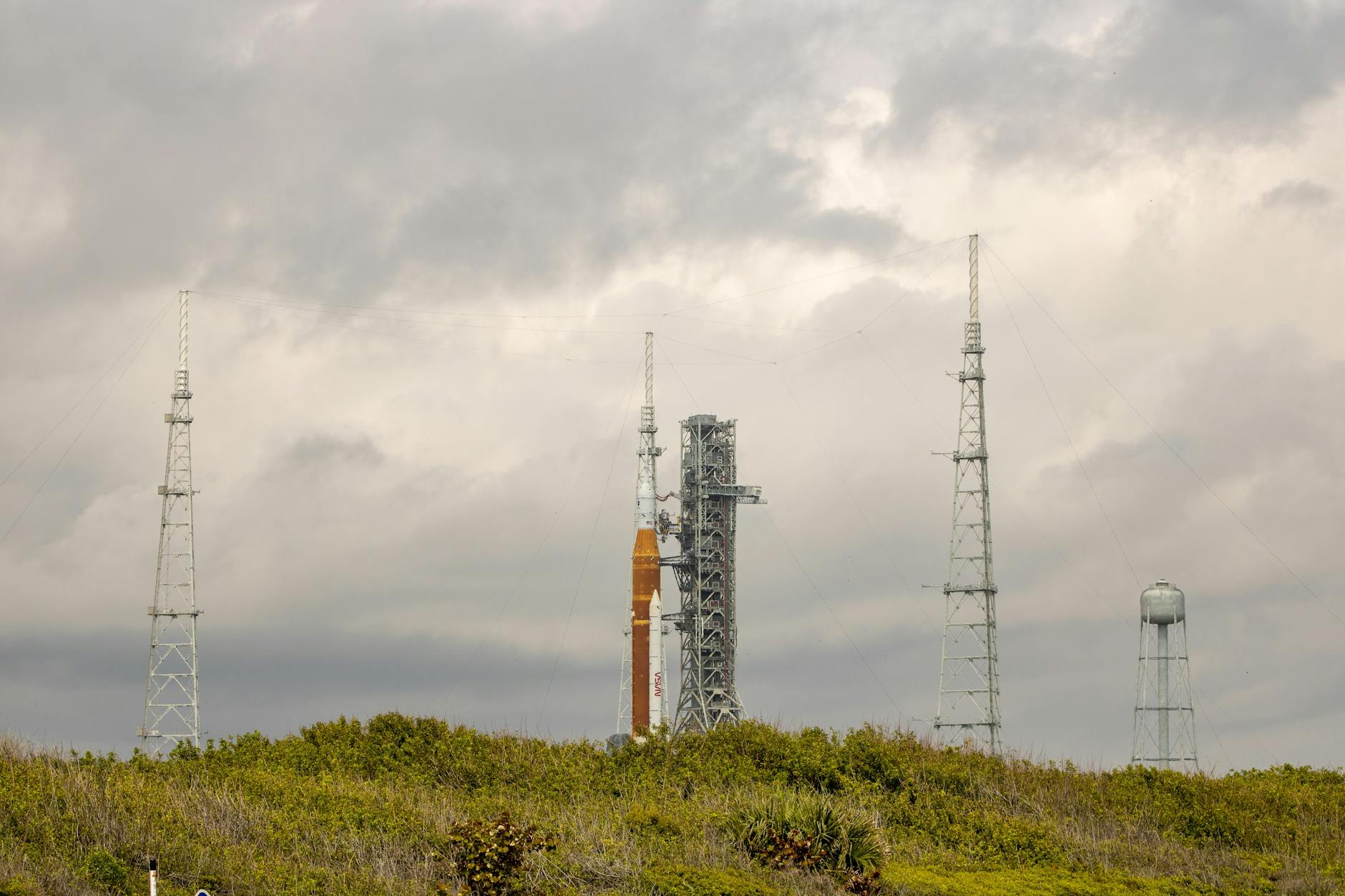
Artemis 2 Rocket Leak 2026: NASA's Critical Fueling Test Reveals Persistent Challenges
*Wednesday, February 4, 2026* — In a high-stakes operation that could determine the fate of America's return to crewed lunar exploration, NASA engineers successfully fueled the massive Space Launch System (SLS) rocket for the Artemis 2 mission today, but not without revealing a familiar adversary: hydrogen leaks. The critical wet dress rehearsal, conducted at Kennedy Space Center's Launch Complex 39B, marks the final major test before the historic mission that will send four astronauts around the Moon—the first humans to venture beyond low-Earth orbit since 1972. The central question now reverberating through the space community: **Is Artemis 2 ready to fly after leak issues, and could a February 8 launch still be in the cards?**
The Weight of History: Why Artemis 2 Matters Now
Artemis 2 represents more than just another space mission—it's the crucial bridge between the successful uncrewed Artemis 1 test flight in late 2024 and the planned lunar landing of Artemis 3 in late 2027. The four astronauts—NASA's Reid Wiseman, Victor Glover, Christina Koch, and Canadian Space Agency astronaut Jeremy Hansen—are poised to become the first humans to travel to lunar vicinity in over half a century.
What makes today's developments particularly significant is their timing. We're at a pivotal moment in the new space race, with China accelerating its lunar ambitions and commercial partners like SpaceX developing competing lunar architectures. The **Artemis 2 moon rocket launch date 2026** has become a symbolic deadline, representing America's commitment to maintaining leadership in deep space exploration. Any delay now would ripple through the entire Artemis program, potentially affecting downstream missions, international partnerships, and the program's political support.
"This isn't just about technical readiness," explains Dr. Laura Forczyk, founder of space consulting firm Astralytical. "It's about demonstrating consistent capability. After the Artemis 1 success, the world is watching to see if NASA can achieve operational tempo with the SLS. Every test, every fueling operation, builds—or erodes—that confidence."
The February 4 Fueling Test: A Deep Dive into the Data
Today's operation began in the pre-dawn hours at Kennedy Space Center, with teams loading approximately 730,000 gallons of super-cooled liquid hydrogen and liquid oxygen into the 322-foot-tall rocket. The process, known as a wet dress rehearsal, simulates every aspect of launch day except for ignition. According to NASA's preliminary data release, the core stage and interim cryogenic propulsion stage were successfully filled to 100% capacity—a significant milestone in itself.
However, the **Artemis 2 rocket leak 2026** narrative emerged during the final stages of tanking. Sensors detected hydrogen concentrations exceeding allowable limits at the quick-disconnect interface between the mobile launcher and the rocket's core stage—the same general area where persistent leaks plagued the Artemis 1 campaign. NASA officials confirmed the leak rate was approximately 3-4% above the maximum allowable limit, though they emphasized it remained within "operational safety margins" for the test.
Key metrics from today's test:
- **Total fueling time**: 8 hours, 42 minutes (15 minutes longer than planned)
- **Leak detection**: At T-2 hours, 17 minutes in the countdown
- **Maximum leak rate**: 5.5% hydrogen concentration (limit: 4%)
- **System response**: Automatic safety systems engaged, temporarily halting flow
- **Resolution**: Engineers adjusted pressure and flow rates, resumed fueling
- **Final status**: Tanks reached 100% capacity, stable for 45 minutes
"We saw exactly what we needed to see today," said Artemis 2 Launch Director Charlie Blackwell-Thompson in a post-test briefing. "The system performed as designed when it detected an anomaly. We managed it, we completed the test objectives, and we now have invaluable data. This is why we test."
But the presence of hydrogen leaks—even manageable ones—raises important questions about the SLS's design maturity. Hydrogen, the smallest molecule, is notoriously difficult to contain, especially at the cryogenic temperatures required for rocket propulsion (-423°F). The SLS uses updated seals and connection systems compared to the Space Shuttle, but today's events suggest the fundamental physics challenge remains.
Expert Analysis: Reading Between the Data Points
The space engineering community is divided in its assessment of today's **NASA Artemis 2 fueling test results**. Some see a successful demonstration of system robustness, while others view the persistent leaks as indicative of deeper issues.
**The Optimist Perspective**
"This was a win," argues former NASA flight director Paul Dye. "They detected a leak, the safety systems worked, they adjusted parameters, and they completed the mission. That's exactly how operational rockets behave. Remember, the Saturn V had hydrogen leaks too. The question isn't whether there are leaks—it's whether you can manage them within safety margins."
Proponents point to several positive indicators:
1. The automated detection and response systems functioned perfectly
2. Engineers demonstrated they could troubleshoot in real-time
3. The rocket maintained structural integrity throughout thermal cycling
4. All other systems, including the Orion spacecraft and ground support equipment, performed nominally
**The Skeptic Perspective**
Other experts express concern about what the **Artemis 2 rocket leak 2026** incident reveals about programmatic pressures.
"What worries me isn't the leak itself—it's the normalization of deviations," says Dr. Ramon Sanchez, a cryogenic systems engineer who worked on both Shuttle and SLS. "Every time we accept 'within safety margins but above limits,' we're gradually shifting the goalposts. Hydrogen leaks are cumulative risks. They can cause embrittlement, create explosive atmospheres, and mask other problems."
Sanchez points to historical precedent: "The Challenger disaster happened because of normalized deviation from design specifications on O-rings in cold weather. I'm not suggesting this leak is anywhere near that severity, but the psychological pattern bears watching."
**The Middle Ground**
Most analysts fall somewhere in between. The consensus emerging tonight is that while today's test doesn't automatically disqualify a February 8 launch attempt, it does necessitate additional scrutiny.
"The data suggests they need at least one more verification test," says Forczyk. "Not necessarily another full wet dress rehearsal, but perhaps a targeted leak check with the crew already in place. The question NASA leadership faces is whether to take the extra time now or accept a higher risk posture for the February 8 window."
Industry Impact: Ripples Through the New Space Ecosystem
The **Artemis 2 moon rocket launch date 2026** decision carries implications far beyond NASA. The entire commercial space ecosystem—from traditional contractors like Boeing and Northrop Grumman to new space companies like SpaceX and Blue Origin—has stakes in the outcome.
**For Traditional Aerospace**
The SLS represents the pinnacle of traditional government-contractor space development. Its success validates an approach that has been increasingly questioned in recent years. Each successful SLS launch strengthens the case for this model for certain classes of missions, while failures or significant delays would bolster arguments for commercial alternatives.
**For Commercial Partners**
SpaceX's Starship, currently in development as the Artemis program's lunar lander, operates on a completely different technical paradigm. Persistent SLS issues could lead to increased pressure to accelerate Starship development for crewed missions, potentially reshaping the entire Artemis architecture.
"Every SLS delay makes Starship look more attractive by comparison," notes industry analyst Micah Redfield. "But that's a double-edged sword. If Starship isn't ready either, the entire lunar timeline collapses. The ideal scenario for NASA is both systems maturing on parallel tracks."
**For International Partners**
Artemis is fundamentally an international program, with contributions from ESA (European Service Module), CSA (robotic arm and astronaut), JAXA, and others. Delays strain these partnerships, as other space agencies must adjust their own schedules and resource allocations.
"The international dimension can't be overstated," says Dr. Sinead O'Sullivan, a space economist. "Canada has an astronaut on this flight. Europe built the service module. Japan is developing the lunar rover. When Artemis slips, it's not just NASA's problem—it's a coalition management challenge."
What This Means Going Forward: The February 8 Decision
As of tonight, NASA officials say they will spend the next 48 hours analyzing data before making a final decision about the February 8 launch attempt. The launch window extends until February 21, providing some flexibility, but each day of delay has cascading effects on downstream mission planning.
**The Case for Proceeding**
1. **Technical**: The leak was managed successfully and remained within safety margins
2. **Programmatic**: Maintaining schedule momentum is crucial for political and budgetary support
3. **Operational**: The crew has been in quarantine and training peaks are time-sensitive
4. **Celestial Mechanics**: Later launch dates require different orbital parameters, adding complexity
**The Case for Delay**
1. **Precautionary Principle**: Why accept any unnecessary risk with human lives?
2. **Learning Opportunity**: Additional testing could provide data to prevent future issues
3. **Public Perception**: Another high-profile hydrogen leak could damage program credibility
4. **Crew Confidence**: The astronauts' input will be crucial in the final decision
NASA Administrator Bill Nelson emphasized tonight that "safety will be the overriding factor" in the decision. However, he also noted that "spaceflight has never been, and will never be, risk-free."
The Bigger Picture: Artemis in Context
Today's events must be viewed within the broader arc of space exploration history. The Apollo program experienced numerous technical challenges, including significant hydrogen leaks during the Apollo 13 mission (unrelated to the subsequent oxygen tank explosion). The Space Shuttle program struggled with hydrogen leaks throughout its 30-year history, particularly in the early years.
"We're seeing the natural maturation curve of a new launch system," says Jennifer Heldmann, a planetary scientist at NASA Ames. "The difference today is we have more sensors, more transparency, and higher public expectations. What might have been a routine engineering challenge in the 1960s becomes breaking news in 2026."
What makes the **Artemis 2 rocket leak 2026** situation particularly noteworthy is its timing in the geopolitical landscape. With China planning its own crewed lunar missions in the 2030s, and Russia increasingly isolated from international space cooperation, Artemis has taken on symbolic importance beyond its scientific and exploration value.
Key Takeaways: What We Learned Today
- **The Artemis 2 rocket successfully completed its final major fueling test**, achieving 100% tank loading despite hydrogen leak detection
- **The leak was similar to previous SLS issues** but remained within managed parameters
- **NASA now faces a critical go/no-go decision** for the February 8 launch attempt
- **The incident reveals ongoing challenges** with hydrogen containment in large cryogenic rocket systems
- **Broader implications extend** to international partnerships, commercial space development, and geopolitical space competition
- **Safety systems functioned as designed**, providing confidence in the vehicle's operational protocols
- **The ultimate decision will balance** technical readiness, schedule pressure, and risk tolerance
Looking Ahead: The Next 96 Hours
As we move from Wednesday's test toward a potential weekend launch decision, several milestones will be crucial:
1. **Data review completion** (by Thursday evening)
2. **Engineering review board recommendation** (Friday morning)
3. **Flight Readiness Review** (Friday afternoon)
4. **Crew input and final management decision** (Saturday)
5. **Potential targeted leak checks** (if needed, Sunday)
Regardless of the February 8 decision, today's test represents significant progress. The SLS was fully fueled for the first time with the actual Artemis 2 vehicle, the ground systems performed under operational conditions, and the team demonstrated they can handle anomalies in real-time.
"The bottom line," concludes Forczyk, "is that we're watching a new spaceflight system grow up in public. There will be stumbles. There will be leaks. The measure of success isn't perfection—it's the ability to learn, adapt, and safely push forward. By that measure, today was a good day for Artemis."
*Follow our continued coverage as NASA prepares to make one of the most significant launch decisions of the decade. The Artemis 2 mission, with its four pioneering astronauts, represents humanity's next giant leap—and every step toward that leap matters.*
← Back to homepage